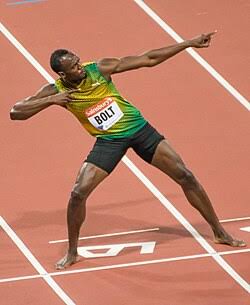
Usain Bolt is the world’s fastest man, best known for the all-time record-breaking 9.58-second 100-meter run at the 2009 World Championships in Berlin. 44 Kilometers per hour. Is it truly just a coincidence that his name has “bolt” in it?
In the early 1990s, researchers explored an idea that has both a mystical interpretation and an almost carnal psychological interpretation – Implicit egotism. It’s the idea that people tend to align themselves with things that resemble themselves. This preference for ego-aligned things is based on simple preferences like liking others more because they are from the same city or have the same name, or more indirect relations to ego, such as long-haired people liking other long-haired people.
Implicit egotism is not by itself a ground-breaking idea because it is just a description of people liking things that they relate to. However, the more extended idea of “nominative determinism” gets a little provocative in its claims. Nominative means related to the name, and determinism implies derived logically and predictably from initial conditions.
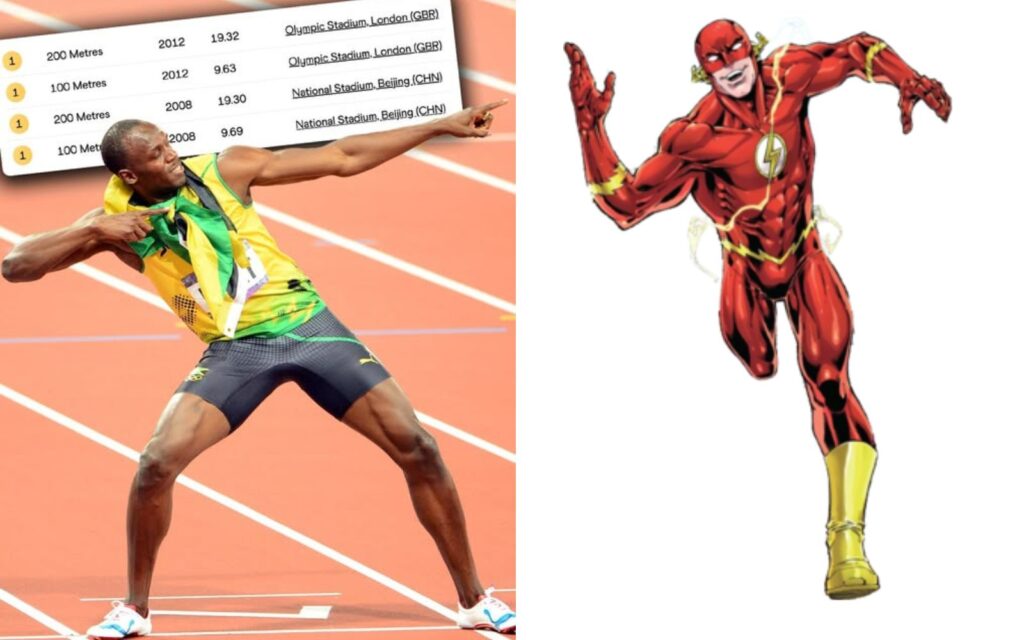
Nominative determinism would suggest that Usain Bolt was drawn to the idea of speed because his name contains “bolt,” which has direct associations with high speed or running, with common expressions like “he bolted through the crowd”. And it’s an expression from over 300 years ago, so Bolt did not create the phrase. Nominative Determinism says people choose careers, jobs, hobbies, or even lifestyles based on the meaning of their name. It’s not unreasonable to think that people align themselves with their name, either knowingly or unknowingly, in some sort of self-fulfilling prophecy or a socially induced prophecy.
Without getting into the mystical explanations of determinism, like “you are always meant to be this, and it was predestined that a child will be born with your name who does this”, Nominative determinism is an actively evolving bias that, for some people, takes effect through a large combination of factors. This hypothesis is debated for its validity and generalizability as a psychological phenomenon, but I would interpret it as a highly plausible individual difference in how people grow up and build their own identities.
Consider the parents of a child who keep telling the child, “You are wise and smart,” to a child named Linus Ace. Imagine common interactions at home during exams like “you will ace the exam, after all, you have Ace in your name”. Such conversations soon build the child’s identity and self-concept with values and behaviors adopted from what the child learned through their parents. This is a well-documented concept in psychology, called “reflected self-appraisal,” coined by Charles H. Cooley, and it has become widely known among parents who work with parenting coaches. It’s also known as the “looking-glass self” phenomenon.
The reflected self-appraisal can induce nominative determinism if it meets certain basic conditions:
- A child’s self-concept is being actively formed or is in a natural process of growing up
- How the child is perceived and what is expected of the child is set/defined by a person of authority or someone the child respects and obeys, like teachers and parents.
- That perception or judgment is elaborated by others, even though it is illogical.
In the case of Linus Ace, the expectation of being an “ace student” is set by the parents, who he presumably respects because they are fictional and I am not scripting them as bad parents. And the superficial logic, almost like a motivational trick, is sticky for the child. Naturally, this child would now have a higher-than-average chance to go on a self-fulfilling prophecy to align himself to his own name. As he grows older, he may be good with cards and call himself the “ace of spades”. More subtly, while playing cards, he may bet more confidently with an ace in hand.
This self-fulfilling prophecy doesn’t have to be triggered by a parent or a teacher while still a child. An adult could actively go through a sense-making phase where they are purposefully building their own identity and find some justification to make decisions, or simply find some superficial reason to filter out decisions. E.g., having Hendrix in one’s name could easily filter out drums and piano in favor of the guitar while choosing which instrument to pursue as a hobby.
But, in cultures where names have additional meanings beyond just the letters, like in Indian or Chinese-derived Korean names, that meaning acts as both an anchor and bias to align with the meaning of the name itself. Here, nominative determinism would get triggered as reflected appraisal from parents, self-exploration of identity, or even justifying one’s behavior in a crisis (as a natural sense-making process).
I know the irony because my name “Aditya” is a reference to the sun, and I hate the sun because it is the literal source and symbolism of heat and brightness, which I hate too. I need the cold, everything cold, and low-temperature visual stimulation. But in some twisted Freudian anime logic, I hate the sun because I hate myself? Even though this seems the literal opposite of nominative determinism, there seems to be an inherent rebellion in me that sublimates as this dislike. Almost like my escape from the trap of this effect turned into a signifier of my personality through negation. I sent those photos to a friend every morning for 2 months while I walked toward the bus station.


The first extensive experimental evidence for implicit egotism or nominative determinism comes from this paper (by Brett Pehlam et. al from the University of Buffalo, US) that published 10 studies demonstrating that people’s unconscious self-associations heavily influence major life decisions, specifically regarding where they choose to live and what they do for a living. These studies had a sample size ranging from a few hundred to 100,000+ people, considering they used public archival data such as the Social Security Death Index.
- Hometown Decisions (Studies 1–5): Individuals are disproportionately likely to live in cities and states that resemble their first or last names.
- Study 1 found that deceased individuals named Mildred, Virginia, Jack, and Philip disproportionately lived in Milwaukee, Virginia Beach, Jacksonville, and Philadelphia, respectively.
- Studies 2 and 3 extended this to surnames, showing that people overrepresented states (in the U.S.) and English-speaking cities (in Canada) that shared initial letter strings with their last names.
- Study 4 confirmed actual adult migration patterns, showing that men and women significantly migrated to states that resembled their first names.
- Study 5 illustrated that deceased residents of U.S. “Saint” cities (e.g., St. Louis) were overrepresented by individuals whose first names or surnames matched the saint’s name. As in, there are more Louis in St. Louis compared to the national base rate.
- Birthday Number Preferences (Study 6): People are disproportionately likely to live in cities whose names prominently feature numbers matching their exact birthday and month (e.g., an individual born on February 2 living in a city containing the word “Two” such as “Two Harbor”).
- Career Choices (Studies 7–10): People disproportionately choose professions or businesses that resemble their names or initials.
- Study 7 revealed that individuals named Dennis or Denise are overrepresented among dentists, while those named Lawrence or Laura are overrepresented among lawyers.
- Study 8 showed that people with first names or initials starting with “Geo” (e.g., George or Geoffrey) are disproportionately represented in the geosciences.
- Studies 9 and 10 highlighted that business owners often possess initials matching their trade, such as hardware store owners with “H” names and roofers with “R” names.
The primary mechanism driving these choices is implicit egotism, defined as an unconscious tendency to prefer places, people, and things that are automatically associated with the self. Because most individuals hold fundamentally positive views about themselves, they automatically form warm associations with self-referential triggers, such as the letters in their names or their birthday numbers.
The authors rigorously evaluated and ruled out alternative explanations which would tend to fit Occam’s razor as – the simplest explanation is often the right one – without requiring convoluted explanations (which I’m about to do as well).
They countered the mere exposure effect (the idea that people simply like their names due to seeing them frequently) by highlighting that birthday numbers prompt a similar preference despite much lower exposure, and noting that name-letter preferences intensify explicitly under psychological threats for individuals with high self-esteem. They also controlled for reverse causality/parental priming (parents naming children after their current location) by validating the patterns using adult migration data and fixed surnames. Finally, they ruled out a simple preference for alliteration in business ownership by showing that individuals preferred matching letters even when the initial phonetic sounds were identical but written with different letters (e.g., Sheryl opening an S-named seashell shop rather than Cheryl).
This explanation is a strong precedent but not a mechanistically rich one, so I am exploring another one.
First, we have the reflective appraisal mechanism for parent/authority-induced self-concept that leads to downstream decisions that align with oneself.
Help me run this site with a donation :)

What if the destiny is real-time coded in actual abstractions associeted with the name and seeking congruence/consistency between life and one’s name is the active motivation that generates this nominative determinism?
Another one is a rather outlandish derivative of an otherwise highly generalized human experience of cross-modal congruence in how something vibes or doesn’t vibe, quite spiritually. Cross-modal congruence is best demonstrated as people preferring congruence between 2 things – e.g., the word “big” written in a big font, instead of a small font size. Or the concept of artificial colors having lots of shiny blues and whites that are the opposite of organic colors such as browns, reds, yellows, and green. Or even the blue and white of the sky and ocean being congruent with the vastness and endlessness of the future. There are many more notable examples of linking features from 1 sense to another sense or 1 idea to another idea in an abstract way. Ideas like saltiness seem more congruent with a triangle than a circle. I have another article on this specifically related to studies done on finding congruence between food and its context.
This is an abstraction layer well explained by embodied cognition, where basic perceptions are built on top of primitive literal sensations like the fire being unpredictable and dangerous and being naturally associated with anger, which has the same components of unpredictability and danger. There is a lot on this form of cognition which I’ve written about here (how our thoughts emerge from the body) and here (why we think measuring distance in feet vs. meters leads to such crash-outs on the internet).
Cross-modal congruence offers one potential explanation that is theoretically solid but experimentally hard to show for life decisions because life decisions are a long chain of many, many events and circumstances that cannot be controlled for.
One key piece of evidence that such cross-modal congruence could be the basis of nominative determinism comes from a study that shows that people could match unknown faces to their names far better than chance[1] (but still not consistently or reliably). The study also showed that it was adult faces that could be matched but not children’s. This is considered evidence for either that children’s faces are essentially flattened out, or that the “matching” evidence has not yet appeared on the face. In a sense, even if it is just a self-fulfilling prophecy or a case of adopting cultural stereotypes, it’s a slow and subtle process. But one must ask – even though the effect is not considered a generalized effect, is there some process that is contributing to a higher-than-chance accuracy in name and face matching?
For starters, people’s names affect how their faces are groomed based on an abstract association of their own name and their own decisions regarding how they keep their hair or how they set their beard or whether they work out all the way to get a chiseled jaw or how much they work out. This hypothesis suggests that people will tend to reach a congruence between their name or personality and their appearance through decisions. This congruence acts as an implicit/unconscous goal or even a justification. For example, a joyful, bubbly person may not choose to have a gym-maxxing routine to maintain that congruence between a “rounded” personality and a “rounded” body. Similarly, a girl with a sharp name may choose a haircut that makes her face appear sharp.
But without going into too much speculation, I’ll show the original experiment that there is a congruence that people identify – the kiki-bouba effect. When asked which shape should be called “kiki” vs. “bouba”, 98% of people choose the sharp-angled shape for kiki and the rounded shape for bouba. This phenomenon is also the basis of understanding metaphors via “shared neural circuits” and “shared features” between 2 or more things.

In fact, that 98% consistency in determining congruence between the name and shape drops to just 50% in those with autism, with the likely explanation that their brain’s are less likely to integrate feature overlaps in concepts that allow this kind of abstract reasoning, commonly understood as being too literal.
This sort of congruence itself can be more abstract and not directly related to the letters of a name. For example, a person whose name sounds “heavy” might naturally find congruence in having a stable or forceful personality. Imagine someone named Lilith has a light, butterfly-like personality.
I would not generalize that everyone is actively seeking an equilibrium via this congruence between identity and life choices, but it appears reasonable that a person’s name contains either phonetics, meaning, or even abstract associations that influence them either directly through self-thoughts, parent-given expectations, or superficial justifications to be something instead of another thing.
Sources

Hey! Thank you for reading; hope you enjoyed the article. I run Cognition Today to capture some of the most fascinating mechanisms that guide our lives. My content here is referenced and featured in NY Times, Forbes, CNET, and Entrepreneur, and many other books & research papers.
I’m am a psychology SME consultant in EdTech with a focus on AI cognition and Behavioral Engineering. I’m affiliated to myelin, an EdTech company in India as well.
I’ve studied at NIMHANS Bangalore (positive psychology), Savitribai Phule Pune University (clinical psychology), Fergusson College (BA psych), and affiliated with IIM Ahmedabad (marketing psychology). I’m currently studying Korean at Seoul National University.
I’m based in Pune, India but living in Seoul, S. Korea. Love Sci-fi, horror media; Love rock, metal, synthwave, and K-pop music; can’t whistle; can play 2 guitars at a time.
Help me run this site with a donation :)