Old school educational ideas are going to make a comeback after a whole decade of sentiments like “students must learn to apply” and “students must learn real-world things like taxes.” Public sentiment has also centered on themes like school education being futile in the real world, as it just teaches you to ace exams and memorize without understanding or learning the practical tools needed to live.
These, of course, are extreme views, but they are prevalent. Researchers reflect the public sentiment that recent trends in education understimulate critical thinking and imagination at the cost of memorization and structure[1].
However.
I suspect that the old school philosophy of education, which was much more about keeping things ready in someone’s mind, will make a comeback because it solves the greatest problem that the human-AI system has – the button pressor syndrome – because humans become the bottleneck in a future where humans just write prompts and thinking is outsourced to LLMs.
There are 2 very counter-intuitive trends emerging:
- LLMs tend to improve and benefit top performers while hurting and disadvantaging bottom performers in school. E.g., for first-year statistics students[2]. Similarly, marketing students[3] who used LLMs effortfully and in knowledge-enhancing ways improved their learning, while those who used them in shallow ways worsened their learning. But in contrast[4], the achievement gap between advantaged and disadvantaged students in the arts/humanities is reducing. (There is likely no real trend; the only fair conclusion is that differences are contextual and cannot be generalized beyond the ecosystem in which they were drawn.
- Even though AI improves productivity for most, LLMs provide a greater boost to lower-performing workers than to top performers by closing 75% of the gap between productivity differences between low-education and high-education[5] workers in the workplace.
These 2 data points are a strong proxy for judgments about the value of education or the effort students and teachers put in. What should be the guiding philosophy for learning?
(for this article, I keep the idea of using education primarily as a method for social & meaningful engagement with other humans outside the scope of this analysis)
The National Education Policy 2020[6] strongly promotes critical thinking, holistic learning, and “grounded learning” in real-world contexts. Even though execution and not philosophy dictate the success of their plan, the approach is clearly a step away from memorization-focused learning. The same is being pushed in the US. Their common core state standards of mathematics[7] focus on incremental understanding and fluency.
Somewhere along these truly reasonable approaches, an obvious but slightly premature event occurred. The world was introduced to LLMs, and the shape of knowledge distribution, knowledge dissemination, self-motivated learning, and the value of educational activities, such as homework, classroom engagement, exams, and group projects, changed. Ever since then, practice and pedagogy have been playing catch-up and adjusting.
The problem that emerged is quite complex. Not that information was more readily available – anyone could’ve gone on Wikipedia; it got introduced as a function of chatting, a habit that is probably native only to humans in this galaxy.
Assume that memorization isn’t valuable because AI has information, and you can just prompt it. Then the natural reaction is to think – forget memorization, let us focus on thinking.
However, in just 2 years, LLMs and AI systems, orchestrated via apps or platforms, outthink most people and outdo their knowledge and the execution of those thoughts.
The glory of “my 5 sentence prompt just made me a Spotify clone app” or “my 1 line statement just gave me data analytics that not even my master’s degree enabled me to discover” is not in humans. The glory is in the AI. It created the value. The human was a glorified button pressor. To say that the button press was the result of human critical thinking would be a bit of a stretch. Planning modes in AI apps or agent orchestration already require extensive critical thinking. So then, what should students focus on to avoid becoming nothing more than button-pressors?
Now, maybe you could say that that’s ok, the human value should be to make decisions, ask questions, and let AI do it. So let us make education about that. And, convincingly, I, too, thought so and called it “the ChatGPT effect“. However, that is also naive in the sense that asking good questions and giving smart instructions to an LLM is not exactly a whole education-level skill. It is a useful skill to ask good questions, to think things through, to question the information itself, and to course-correct the flow of information between humans and AI. But by itself, it is not sufficiently unique to human existence anymore.
There is no doubt that students will adapt and adjust because the brain is plastic and malleable, especially as a new AI-native generation reaches school age. There is no shock in how things were done before vs now. Their reality is AI assistance as a default privilege. What should they learn?
Should their educational activity focus on being extremely efficient button pressors and AI orchestrators, or is there some more value that can be squeezed out of schooling?
The old school philosophy of education, which was much more about keeping things ready in someone’s mind, much more about real-time efficiency, and high verification of accuracy will make a comeback because it solves the greatest problem that the human-AI system has – the button pressor syndrome – caused by the illusion of productivity and intelligence ascribed to a human who simply gets an AI to do something they want via simple or complex prompts, with no valuable human-made input or throughput.
The button pressor syndrome often comes with 4 major liabilities:
- Time: The button pressor requires time which often increases exponentially with task complexity, because prompting entails choosing tools, typing, asking, iterating, comprehension, validation, and repackaging.
- Validation: The button pressor bears the burden of validating the output for correctness, value, goal alignment, and internal consistency.
- Communicability: Unless the button pressor has a deep understanding of what is being done and what the future steps are, the value of the button pressor will tend to be intangible simply through a lack of understanding of what the AI did.
- Complexity increase: Long sequences of button presses tend to increase the complexity of output, which, in all honesty, is often out of scope for average human memory and attention to actually deal with quickly. As such, a human may always tend to simplify because mental resources are costly and spending too many equals pain, while LLMs have no internal pain avoidance mechanism to prefer efficiency over patchwork and exponentially redundant complexity.
These are human bottleneck problems. But they can also be completely solved by a human if they have sufficient memory, theoretical framing, error correction, and communicability.
So, education in the future creates an opportunity to address all 4 of these problems that arise simply because there is a human in the loop.
- Learning theory because AI executes
- Memorization because remembering is faster and cheaper than prompting
- Diagram drawing is more efficient in communicating complexity to humans
| Educational theme | Oldschool | Modern | Future |
| nature of information | Theory | Practical | Theory + tool flexibility (better interaction with AI & improved adaptation in knowledge domains) |
| nature of thinking | Memory | Critical thinking | Memory-based decision-making (real-time in-person advantage) |
| Information medium | Diagrams/drawings on paper | Chat/digital visualizers | Diagrams made in real-time for physical communication (compression & clarity for humans) |
The future themes are built directly counter to the 4 problems I listed above.
Help me run this site with a donation :)

Theory allows a person to deeply understand an LLM’s input and output. Memory-based decision-making allows a person to work faster than button-pressers in real time. They can calculate faster, use tools faster, and make decisions on the fly without requesting more reports. These students can readily scope out information because their memory creates filters to parse vast amounts of information. Their own pattern recognition and signal vs. noise understanding improve because recognition of memorized patterns serves as a signal detection. Diagrams and drawings allow clean compression of vast blocks of information and make it easy to communicate with other people.
All of these are under a broader educational pedagogy of focusing on real-time adaptability and transfer of educational learning into the world.
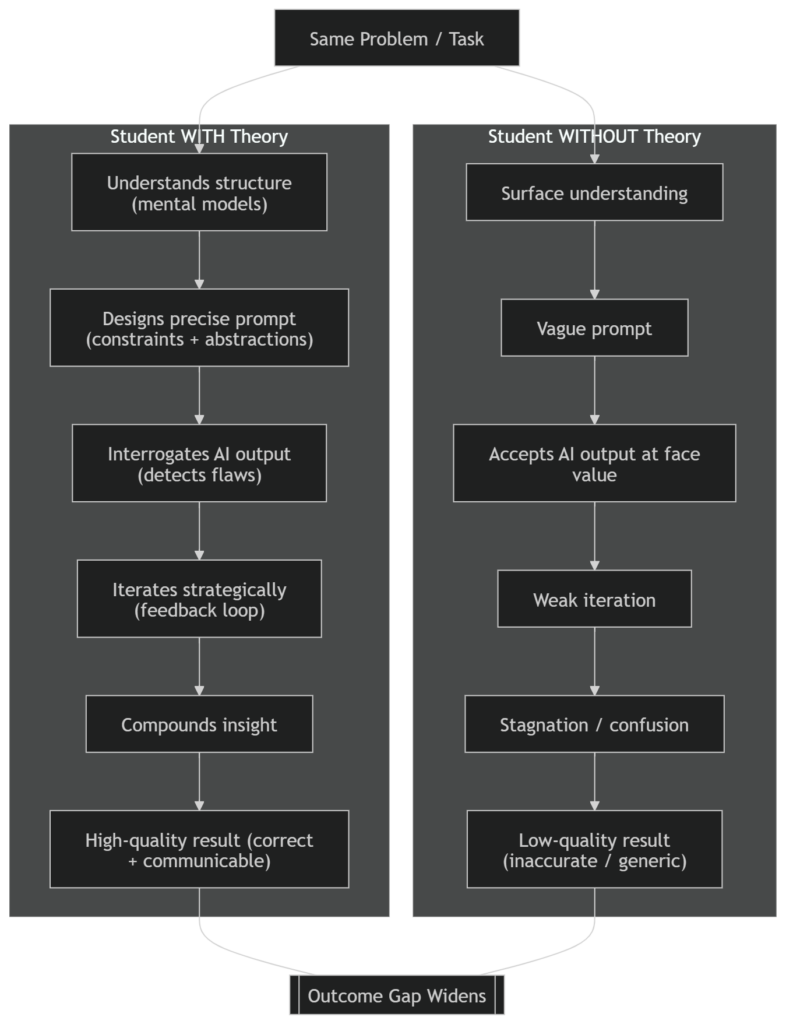
1. Learning theory because AI executes
Theory education has been given a bad name because “Who needs theory when the world requires execution?” This attitude may have been justified when the world really was about carefully developing individual skills that took time to practice and exchanging money for them. Since LLMs commoditized intelligence and even execution, theoretical knowledge about what is expected, how to guide complex AI projects, and how to deal with the subject matter that governs the project itself.
For example, a student finding a creative way to archive historical data from Web 1.0 may require a deep understanding of the internet and its infrastructure, much like a historian would. This theoretical advantage is likely to be far superior for prompting a vibe-coding tool. This theory is also likely to help the student communicate their learning to others. Because theory imposes structure and also tolerance for gaps in knowledge, it becomes an ideal schema to process information that humans or LLMs provide.
This is in no way a revolutionary change. When automated machines were first used in factories to streamline production, people began focusing much more on the ability to maintain, interact with, design & improve, and manage them. And those who learned to do so developed an extensive theoretical understanding of how those machines work, without engaging in a theory-versus-practical learning debate.
As a byproduct of theoretical understanding, critical thinking emerges because theory lies at a more abstract level. However, tool usage binds it to real-world experience. Essentially, a theory-first approach helps critical thinking and even imagination by building internalized cognitive models of how something works and what it does.
2. Memorization because remembering is faster and cheaper than prompting
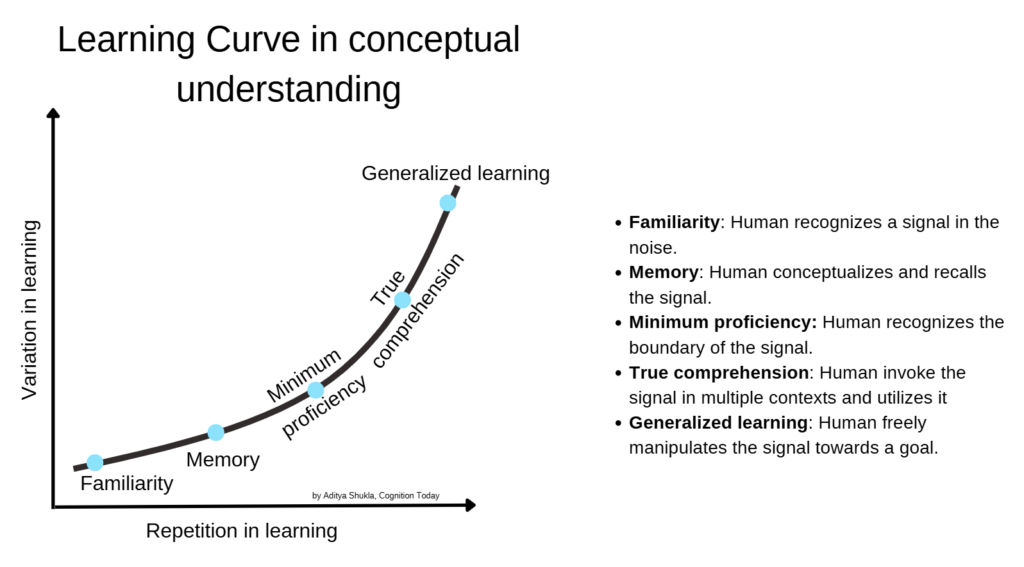
There 2 things about memorization that cannot be undervalued. Memory is the foundation of knowledge. Thinking is built on top of memory traces because thinking invokes information to work with. I’ve explained this in great detail here: repetition is the fundamental learning tool that leads to memory; memory then expands through variation; and eventually, repetition and variation lead to the development of expert thinking. This directly means that someone with more useful information in memory will likely have better prompts and richer conversations with humans.
In future contexts, execution speed will be a valuable skill because the current bottleneck is the human, not the LLM. That speed depends on how well a human knows facts, the informational scope, or the methods to execute. Better memory means fewer buttons pressed and less computing power and human resources consumed, so there is now an incentive to have people with good memory in certain domains.
This speed comes through an automaticity of learned information, which frees up cognitive space for more thinking. Without repeating this all over, memory is compressed information. That compression allows flexible thinking by making information portable, which is needed for real-time implementation. Anyone can prompt an AI to find statistics. But a person who knows them can move the conversation ahead much faster without pausing the conversation to find them. Anyone can detail a geography’s ecosystem, but someone who knows it by heart through study is likely to be faster by 100 key presses and 10 minutes of reading.
If a human-in-the-loop AI is to be preferred in the future, a human with valuable objects in memory is likely a worthy educational goal.
3. Diagram drawing is more efficient in communicating complexity to humans
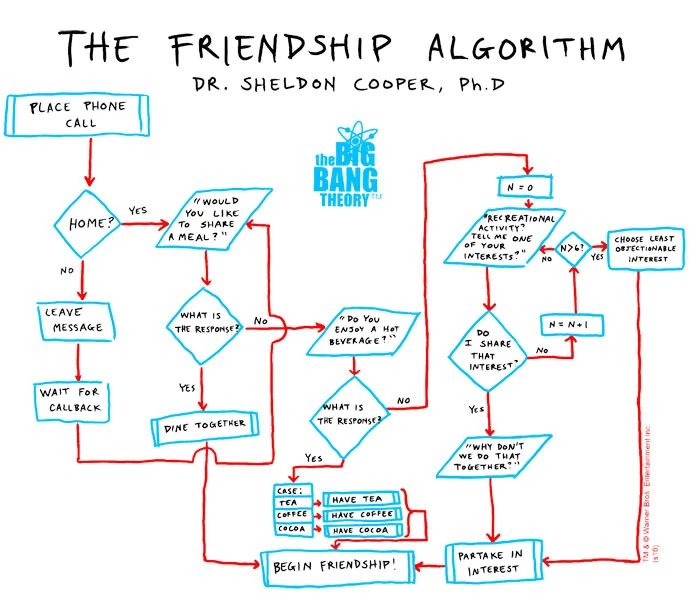
Chat is killing flow. Zapier agents building “zaps” with chat, n8n workflows, and Langsmith Fleet’s lack of diagrams, among other things, all point to 1 thing students need to learn: Flow charts.
Most valuable builds or creations people make in the future will likely use specialized tools, agents, or other means, and those builds will likely only work when the creator can defensibly create a flowchart (physical or mental) and stress-test connectivity and information flow. Education should support an abstract skill that transfers across tools that come into existence and die within a semester.
A hand-drawn diagram is far more manipulable and iteration-friendly in human-to-human contact for the same previous reason (faster, fewer buttons pressed), but also for the unique reason that a person who can map a flow is likely to inspire trust in others who need work done.
It’s not too late for education to catch up to this. Learning to make flowcharts at multiple zoom levels will be a make-or-break skill for future productivity, and it is domain-agnostic. Because this is domain-agnostic, any student should ideally be able to convert their learning into simple flows that structure information in terms of direction of flow, if/then conditionals, boundaries, etc., deeper learning then expands as the flow gets more “zoom-in” properties and “zoom-out” contexts.
Tip:
Educators: I’d recommend creating pen-and-paper flowcharts in class and for homework. Students’ memory, critical thinking, logic, analysis, goal-setting, etc., are all covered in this broad exercise.
TL;DR
The very thing education is trying to run away from might end up being valuable once again because LLMs came and disrupted human value.
Memorization, learning theory, and drawing diagrams reduce latency in thinking, productivity, and interaction. They improve signal detection in a heavily bombarded informational dome, and they add realistic constraints to search spaces that AI has blurred.
These become economically valuable skills in humans, so future education has a good reason to pursue what it already did well, yet rejected prematurely.
Sources
[2]: https://www.tandfonline.com/doi/full/10.1080/0020739X.2025.2539711
[3]: https://www.tandfonline.com/doi/full/10.1080/03075079.2025.2487570
[4]: https://www.sciencedirect.com/science/article/pii/S259029112500840X
[5]: https://www.nber.org/papers/w34851
[6]: https://www.education.gov.in/sites/upload_files/mhrd/files/NEP_Final_English_0.pdf
[7]: https://www.independent.org/wp-content/uploads/article/2012/02/2012_02_16_ednext_common_core.pdf

Hey! Thank you for reading; hope you enjoyed the article. I run Cognition Today to capture some of the most fascinating mechanisms that guide our lives. My content here is referenced and featured in NY Times, Forbes, CNET, and Entrepreneur, and many other books & research papers.
I’m am a psychology SME consultant in EdTech with a focus on AI cognition and Behavioral Engineering. I’m affiliated to myelin, an EdTech company in India as well.
I’ve studied at NIMHANS Bangalore (positive psychology), Savitribai Phule Pune University (clinical psychology), Fergusson College (BA psych), and affiliated with IIM Ahmedabad (marketing psychology). I’m currently studying Korean at Seoul National University.
I’m based in Pune, India but living in Seoul, S. Korea. Love Sci-fi, horror media; Love rock, metal, synthwave, and K-pop music; can’t whistle; can play 2 guitars at a time.

We now rely on your support to run this site. Please donate if you find it useful:)
Help me run this site with a donation :)